 USD
USD EUR
EUR GBP
GBP CAD
CAD CNY
CNY SAR
SAR SGD
SGD NZD
NZD ARS
ARS INR
INR COP
COP AED
AED

Human Hair Wig Problems: A Guide to Tangling, Shedding & Dryness
DK HAIR · THE HAIR KNOWLEDGE SERIES
Tangling, Shedding
& Dry Hair
Troubleshooting Your Human Hair Wig
Understand what you are seeing, choose a gentle next step, and know when to ask for help.
START HERE
A Quick Check Before You Begin
When a wig starts to tangle, lose strands or feel rough, look at when the change began, where it occurs and what happened beforehand. A problem after a first wash needs a different review from friction at the nape after months of wear.
At DK HAIR, we consider the hair, the lace or cap construction, and the care history together. This guide covers human hair wigs and lace hairpieces. For a bonded or sewn-in installation, ask your stylist to handle removal and attachment areas.
Before trying a treatment
Take clear photos, keep the order details, and pause further coloring or high-heat styling. If the hair is tightly matted, breaking with gentle handling, or coming away in clumps, go straight to the support checklist below.
Tangling & matting
Look for where strands catch and whether the problem started suddenly.
Shedding & breakage
Check whether hair is leaving the base or snapping along the strand.
Dryness & frizz
Review product buildup, conditioning, heat and recent color services.
01 / TANGLING
Detangle Gently, One Section at a Time
Tangling can develop where hair rubs against clothing or against itself. Dryness, buildup, previous treatments and hair condition can also contribute. On longer wigs, check the nape first. If the same small area tangles repeatedly, look at the cap fit and the surfaces touching the hair.
How to work through a light tangle
- Stabilize the wig. For a removable unit, work with it off your head and supported. Hold the section above the tangle so the lace does not take the strain.
- Divide the hair. Separate a small section with your fingers. Keep the rest out of the way without stretching the cap or pulling the hairline.
- Add slip only as directed. If your product instructions permit it, use a small amount of a suitable detangling or conditioning product on the lengths. Keep it away from tied knots and follow any rinse-out directions.
- Clear the tips first. Ease loose strands apart, then use a smooth wide-tooth comb in short, gentle strokes toward the ends.
- Raise the starting point gradually. Once the lower section is clear, begin a little higher and comb down through it. Continue only while the hair releases easily.
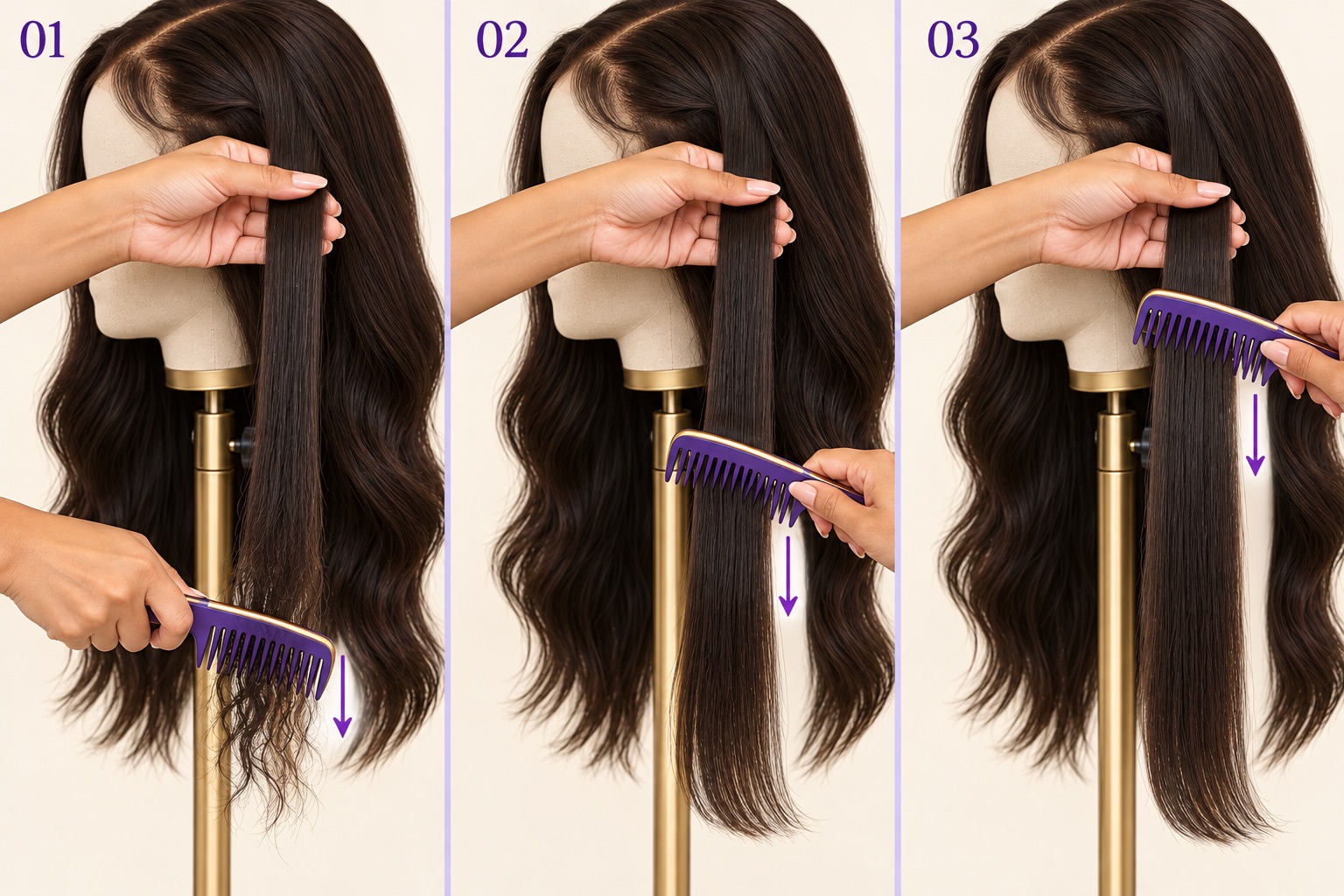
The starting point moves up; each stroke goes down.
Beginning at the base and dragging a comb through a tight knot can load the whole section with tension. If a knot will not release gently, stop and have it assessed.
If the hair mats during the first wash
Keep a record of the shampoo, water temperature and washing method. Photograph the matted area and contact DK HAIR before repeating the wash, cutting the knot out or trying a stronger treatment. Sudden matting can have more than one cause; a photo alone does not establish a fault in the hair or the care routine.
02 / SHEDDING
Separate Shedding from Hair Breakage
“Shedding” is often used for every loose hair, but it helps to describe what you actually see. Look at a few strands on a plain background without pulling more hair out to test it.
Hair leaving the base
Longer loose strands together with thinning at a lace area or weft can suggest shedding from the attachment. Inspect the affected area gently.
Hair snapping along its length
Many short pieces of different lengths can suggest breakage, particularly after forceful detangling, heat or chemical work.
These are clues, not a diagnosis: a wig contains different hair lengths, so strand length alone cannot confirm the cause.
What to do next
- Record the location and timing. Is it concentrated at the hairline, parting, nape or a weft? Did it begin before wear, after lace trimming, or after a service?
- Reduce handling. Pause tight styling, extra plucking and repeated brushing. Protect the lace when removing adhesive and use the removal method specified for the adhesive and wig.
- Check without pulling. Look for torn lace, a loose seam or a visibly thinning patch. Photograph the area rather than stretching it or tugging on the remaining hair.
- Ask for a review. Persistent heavy loss, clumps or a growing thin patch should be assessed. Conditioner cannot reattach hair that has come away from the base.
Use a trend, not a fixed daily hair count.
A few loose strands during initial handling can occur. There is no single count that suits every wig, density and grooming session. Record a clear change in behavior and visible density instead of repeatedly combing to count hairs.
Where possible, keep a small sample of the loose strands and note whether they appeared during washing, drying or wear. Do not apply knot sealers, household glue or other repair products before discussing the issue with us.
03 / DRYNESS
Improve Manageability Without Over-Treating
Dry or rough-feeling hair can become harder to manage. Review recent heat styling, coloring, washing and product use before adding a new treatment. A coated or sticky feel may also point to buildup, so describe the feel as well as the appearance.
A measured approach to dryness
- Pause extra stress. Set aside bleach, permanent color and repeated high-heat styling while you assess the condition.
- Cleanse if needed. If products have built up, follow the wig’s cleansing instructions and rinse thoroughly. Avoid repeated strong cleansing or improvised household mixtures.
- Condition the lengths. Use a conditioner suitable for the specific human hair product. Apply it where directed, focusing on the mid-lengths and ends and keeping it off lace knots.
- Follow the treatment timing. A mask or deep conditioner should be used according to its directions and the wig’s care guidance. Longer soaking or added heat is not automatically better.
- Assess after drying. Judge manageability once the hair and cap are fully dry. A small patch test is more useful than adding several new products to the whole wig at once.
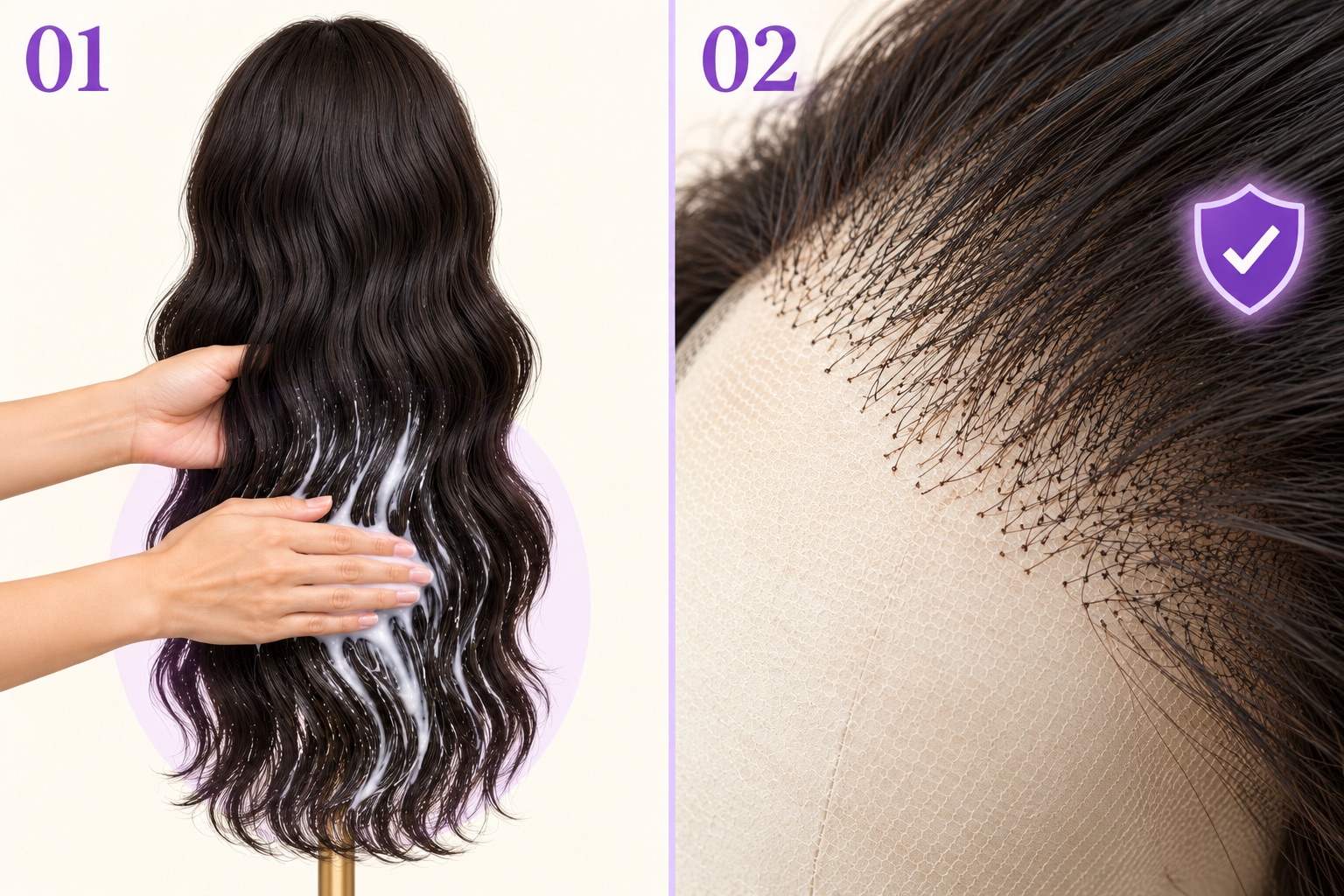
What conditioning can and cannot do
Conditioning may improve softness and make detangling easier. It cannot replace missing hair, fix torn lace or join a snapped strand. If roughness comes with ongoing breakage, stop experimenting and ask for an assessment.
When frizz appears after washing
Waves and curls may look fuller or less defined after combing. Use the drying and styling method recommended for that texture. Let the cap dry without stretching it, then check the result. If thermal styling is allowed, use heat protection and the lowest effective setting; curling and flat irons should touch only fully dry hair.
Air-drying and blow-drying guidance can differ by product and desired finish. Confirm the method for your wig instead of applying a single rule to every texture. If the texture changes sharply after a wash, share before-and-after photos with us.
04 / WASHING
Keep the Next Wash Simple
For a wig with manageable hair and no severe matting, use the following routine alongside the instructions supplied for that product:
- Prepare: gently release light tangles before washing; leave a tightly matted unit for assessment.
- Cleanse: support the cap and keep the lengths flowing in one direction. Use suitable shampoo and cool to lukewarm water, without scrubbing the hair into a ball.
- Rinse and condition: rinse out shampoo, apply conditioner where directed, and keep the lace knots clear.
- Remove water gently: rinse thoroughly and blot with a clean towel. Avoid wringing or rubbing.
- Dry and reassess: support the unit without stretching the cap. Follow its drying guidance and let the base dry completely before storage or further handling.
Choose the washing interval according to wear, sweat and buildup. If the same problem returns soon after a careful wash, record it and ask for advice rather than repeating stronger treatments.
05 / DAILY HABITS
Reduce Repeat Problems
- Check the nape after wear. Release small tangles gently before they tighten, using the tool and method suited to the texture.
- Watch for repeated friction. Notice whether a collar, scarf or loose cap repeatedly rubs the same area.
- Protect the hairline and lace. Support the wig when adjusting it; use its cap or straps rather than tugging the fine lace edge.
- Store it fully dry. Keep hair loosely arranged on an appropriate stand or in a clean storage bag or box. Avoid crushing curls.
- Plan overnight care. Remove a removable wig before sleeping. For longer-wear installations, get specific protection and maintenance advice from your stylist.
- Keep a simple care record. Note washes, products, heat settings and color services. This helps identify what changed if a problem appears.
For cap measurements, fitting and everyday wearing questions, see our Human Hair Wig FAQ.
06 / SUPPORT
When to Pause and Contact DK HAIR
Contact us promptly if a new unit mats severely, hair comes away in clumps, a thin patch grows, or you see damaged lace or a loose seam. You can also ask for help when gentle care does not improve the issue.
Send your original DK HAIR sales representative a clear record of the problem. If you do not have their contact details, use our contact page. Include:
- Order and product: order reference, product name, length, texture and color.
- Timeline: when it arrived, when the issue first appeared, and whether it began before wear or after a wash or service.
- Photos or a short video: the full wig, a close view of the problem and the inside of the relevant cap or lace area. Keep handling gentle.
- Care history: shampoo, conditioner, drying method, heat settings, color or bleach services, adhesive use, and any trimming or plucking.
- What you have tried: describe each step and whether it helped, made no difference or made the issue worse.
Keep the product available for review.
Avoid cutting out problem areas, applying further chemicals or making repairs before we review the details. Our team can discuss the next appropriate step after assessing the product and order information.
Hair condition, processing, construction and care can all affect performance. A useful assessment considers these together and focuses on what the product needs next.
HELP WITH YOUR DK HAIR PRODUCT
Show Us What You Are Seeing
Share your order details, a few clear photos and your care routine so we can review the issue and discuss the next step.


