 USD
USD EUR
EUR GBP
GBP CAD
CAD CNY
CNY SAR
SAR SGD
SGD NZD
NZD ARS
ARS INR
INR COP
COP AED
AED

Raw Hair, Virgin Hair & 100% Human Hair: Understanding the Difference from the Source
DK HAIR · THE HAIR KNOWLEDGE SERIES
Raw Hair, Virgin Hair
& 100% Human Hair
Understanding the Difference from the Source
FOLLOW THE HAIR
Start with the Source
The quality of a hair product starts long before it becomes a bundle, a lace piece, or a wig. It begins with how the hair is collected, the condition of the strands, and what happens during manufacturing.
Two products may carry the same “Virgin Hair” label yet differ considerably in price and performance. To understand why, it helps to look beyond the name and follow the hair from collection to the finished product.
At DK HAIR, we explain these differences through sourcing, selection, and processing—and clearly identify what our own product categories mean.
01 / COLLECTION
How Human Hair Is Collected
COLLECTION ROUTE 01
Hair Purchased Directly from Donors
Specialist collectors purchase hair directly from people, often paying a premium for suitable length, condition, and untreated hair.
When the hair is tied securely before cutting and kept organized afterward, its natural root-to-tip direction can be preserved. This provides a useful starting point for producing hair with intact, aligned cuticles.
However, direct collection alone does not guarantee quality. Manufacturers still need to inspect the hair for previous chemical treatments, damage, usable length, and consistency.
In our selection process, suitable hair that meets the required condition, length, and single-donor weight specifications is prioritized for Raw Hair products.
A donor’s collection may contain excellent hair but not enough usable weight to make a complete single-donor product. That material can still be suitable for high-quality Virgin Hair production. Combining carefully selected hair from several donors changes its single-donor status; it does not automatically make it chemically processed or poor quality.
COLLECTION ROUTE 02
Loose Hair Collected from Salons
Hair collected after cutting in salons may retain its cuticles, but its root-to-tip direction can become mixed.
The strands may also have different treatment histories. Some may never have been chemically altered, while others may have been colored, bleached, permed, or straightened.
For this reason, salon-collected hair cannot automatically be classified as Virgin Hair. Its previous treatments and current condition must first be assessed.
Untreated hair with mixed strand directions can be virgin in processing history and non-Remy in arrangement. Careful root-to-tip sorting can realign suitable strands while preserving their cuticles.
COLLECTION ROUTE 03
Recovered Loose Hair from Mixed Sources
Other collections contain loose, shed, or discarded hair gathered from multiple people. These materials can vary considerably in length, texture, color, treatment history, and cuticle condition.
Naturally shed hair is not automatically damaged. The manufacturing challenge is the variability of the collected material and the difficulty of confirming its history.
Depending on the starting condition and production budget, manufacturers may sort the strands by direction or use more extensive processing to create a consistent appearance and feel.
These different collection and manufacturing routes help explain why products made entirely from human hair can perform very differently.
02 / RAW HAIR
What Does Raw Hair Mean Today?
Raw Hair is commonly associated with carefully selected human hair that has not undergone chemical alteration. However, suppliers differ in their requirements for single-donor sourcing and steam-created textures.
The most useful question is therefore: What does this supplier’s Raw Hair standard actually include?
The DK HAIR Raw Hair Standard
At DK HAIR, our Raw Hair bundles and lace pieces are made with single-donor hair. Each individual bundle or lace piece uses hair from one donor.
This describes each individual item. It does not mean that every bundle and lace piece in a complete order comes from the same person.
Our Raw Hair category includes two texture options:
Natural Texture Raw Hair
Hair that retains its original texture without steam reshaping.
Steam-Textured Raw Hair
Hair whose wave or curl pattern has been created using controlled heat and steam, without chemical alteration.
Steam-created texture is different from the donor’s original texture. We distinguish between the two so customers understand how the finished pattern was achieved.
Why Natural Texture Varies
In our sourcing experience, selected Indian and Burmese hair can have finer strands, a softer feel, and a natural wave. Many Chinese and Vietnamese hair supplies have thicker strands and a naturally straighter texture.
These are observations within the materials we select, rather than fixed rules for every donor. Individual variation remains important.
Some wave and curl patterns are naturally present in the collected hair. Others are created from straighter hair through steam texturing. Under DK HAIR’s classification, steam-textured hair remains within our Raw Hair category when it meets our sourcing requirements and has not undergone chemical alteration.
Expected Longevity
Based on our experience, DK HAIR Raw Hair can last approximately 4–5 years with appropriate care, through repeated wear and reuse.
Actual longevity depends on wearing frequency, maintenance, storage, heat styling, and subsequent coloring or bleaching. This estimate refers to the hair itself; lace bases, knots, and other components may require repair or replacement sooner.
CUSTOMER FEEDBACK
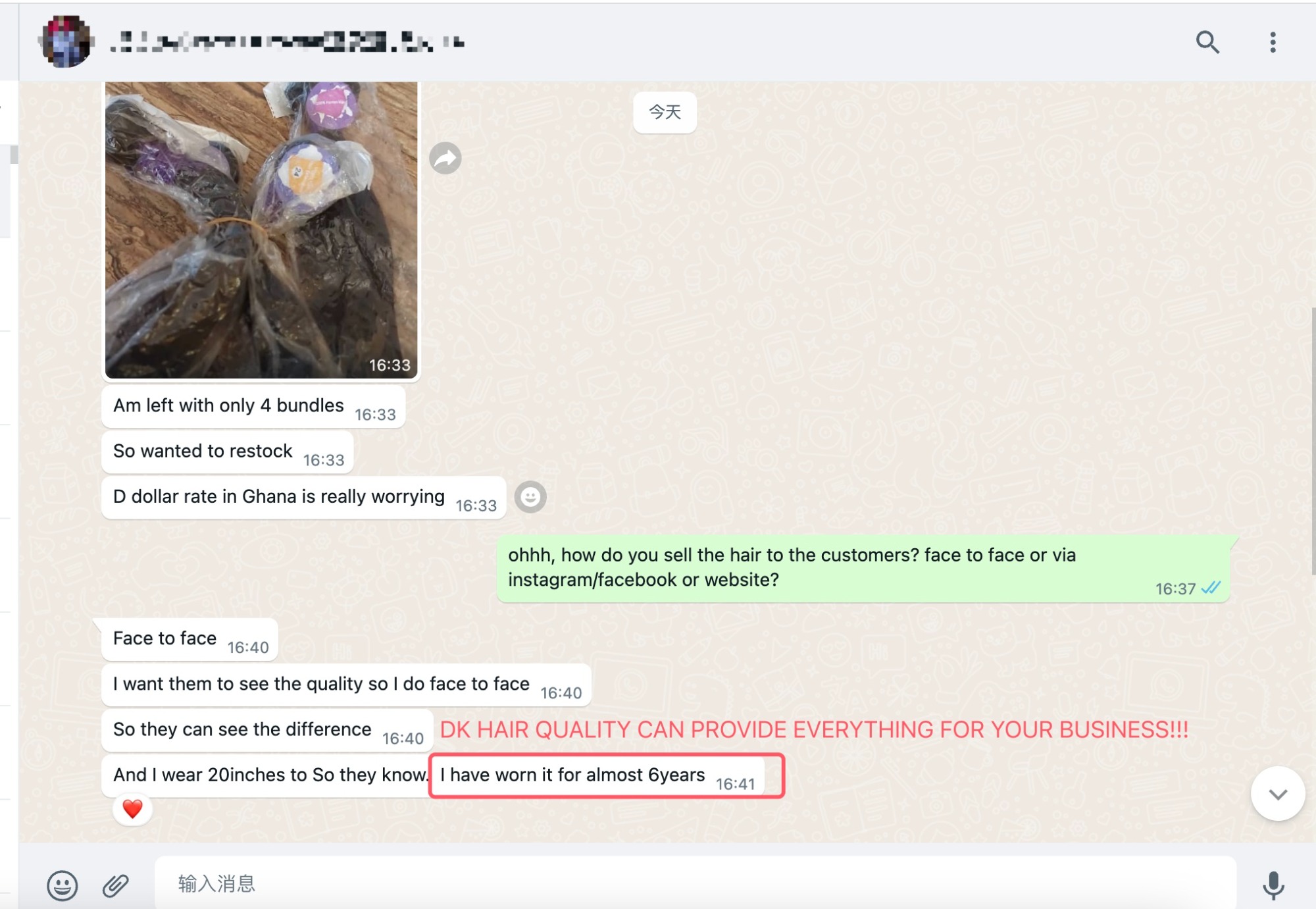
One Customer’s Experience: Almost Six Years
One Raw Hair customer shared a longer experience with DK HAIR, reporting almost six years of use:
“I have worn it for almost 6years”
03 / VIRGIN HAIR
What Does Virgin Hair Mean Today?
In our earlier industry experience, “Virgin Hair” was often used for minimally processed hair similar to what many suppliers now market as “Raw Hair.”
Over the past decade, we have seen the term appear across a wider range of prices and product qualities. This has made understanding the material behind the label increasingly important.
The central meaning of Virgin Hair concerns chemical processing history. It does not, by itself, establish a particular collection method, single-donor sourcing, or aligned cuticles.
High-quality Virgin Hair can come from carefully selected, directly collected hair. It may include suitable material from several donors or smaller collections that do not meet the weight requirements for individual single-donor products.
Other hair may also qualify as virgin if its untreated history can be confirmed. Its condition and strand direction still need to be assessed separately.
Why Virgin Hair Prices Vary
Two major factors are the collection method and the condition of the starting material. Other factors include:
- How much usable hair remains after selection.
- The length and fullness of the strands.
- The work required to sort and align the hair.
- How closely different collections must be matched.
- The construction and processing of the finished product.
A lower price does not reveal the complete history of the hair, just as a higher price does not prove a particular standard.
Source Hair vs. Finished Product
Some suppliers use “Virgin Hair” to describe the starting material, even when the finished product has subsequently been colored or otherwise chemically processed.
For clarity, a product made from virgin source hair and then colored should disclose that processing. Customers should be able to distinguish untreated finished hair from a product manufactured using virgin starting material.
Expected Longevity of DK HAIR Virgin Hair
Based on our experience, DK HAIR Virgin Hair can last around 2 years with appropriate care. Some customers have reported using it for more than three years while the hair remained in good condition.
Actual longevity depends on wearing frequency, maintenance, storage, heat styling, and subsequent coloring or bleaching. Lace bases, knots, and other components may require repair or replacement before the hair itself.
CUSTOMER FEEDBACK
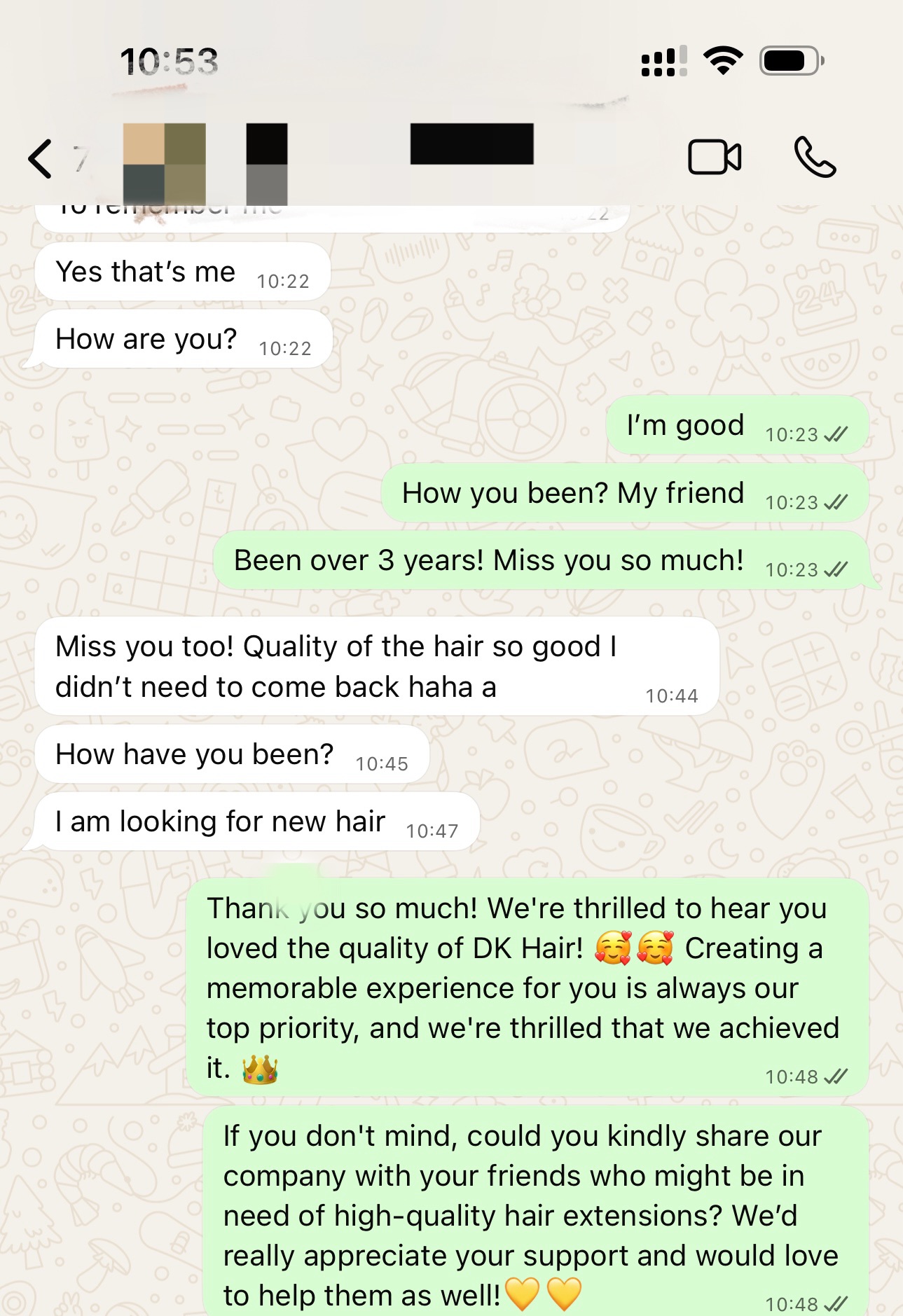
A Returning Customer After More Than Three Years
The conversation below is with a customer who purchased DK HAIR Virgin Hair more than three years earlier. When reconnecting with us, the customer wrote:
“Quality of the hair so good I didn’t need to come back”
04 / MATERIAL COMPOSITION
What Does “100% Human Hair” Mean?
“100% Human Hair” describes the hair fibers as human hair, without synthetic or animal-hair blending. It does not identify the collection method, cuticle condition, donor count, or processing history.
Raw Hair and Virgin Hair are also 100% human hair. The phrase is a broad material description, rather than a separate quality grade.
Products carrying only this label can range from well-preserved hair to extensively processed hair from mixed collections.
Why Some Products Require More Processing
When the starting material varies substantially in condition, color, or strand direction, manufacturers may use treatments to produce a more uniform finished product.
These can include coloring, treatments that partially or extensively remove the cuticle, and surface coatings that create an initially smooth feel. Such processing does not restore the hair to its original untreated condition.
In our industry experience, some heavily processed products are finished in #1 Jet Black and are unsuitable for further bleaching. Some may provide approximately 3–6 months of use, depending on the product and care routine.
These observations apply to certain heavily processed products—not to everything labeled “100% Human Hair.” Neither black color nor the material label alone establishes the hair’s quality or expected lifespan.
05 / CUTICLE DIRECTION
Where Remy and Non-Remy Fit
Remy and non-Remy describe another aspect of the material: the arrangement of the strands and their cuticles.
Remy hair retains cuticles aligned in the same root-to-tip direction. Non-Remy hair has mixed strand directions.
Consistent direction
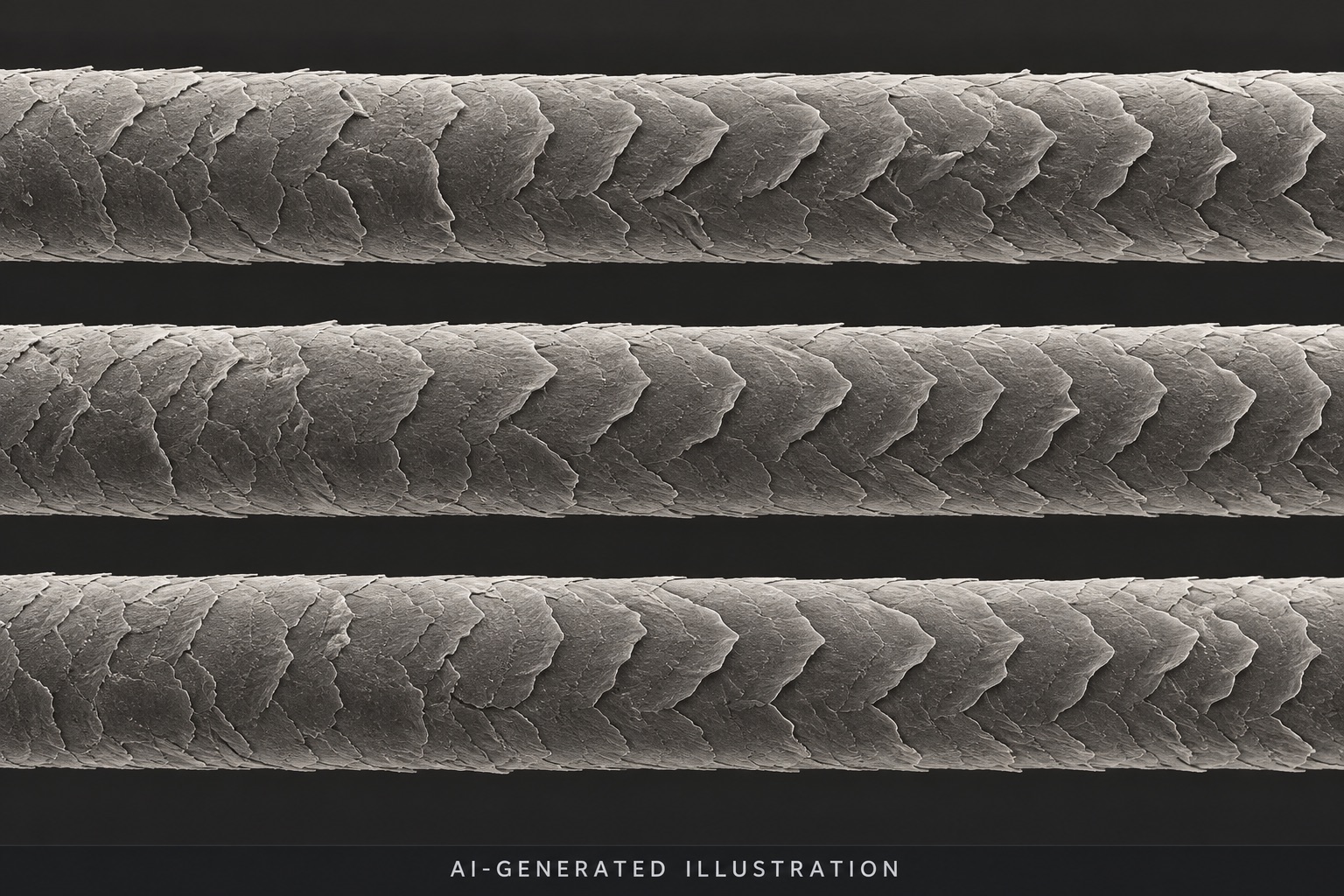
All three strands share the same root-to-tip orientation, illustrating the arrangement associated with Remy hair.
Mixed direction
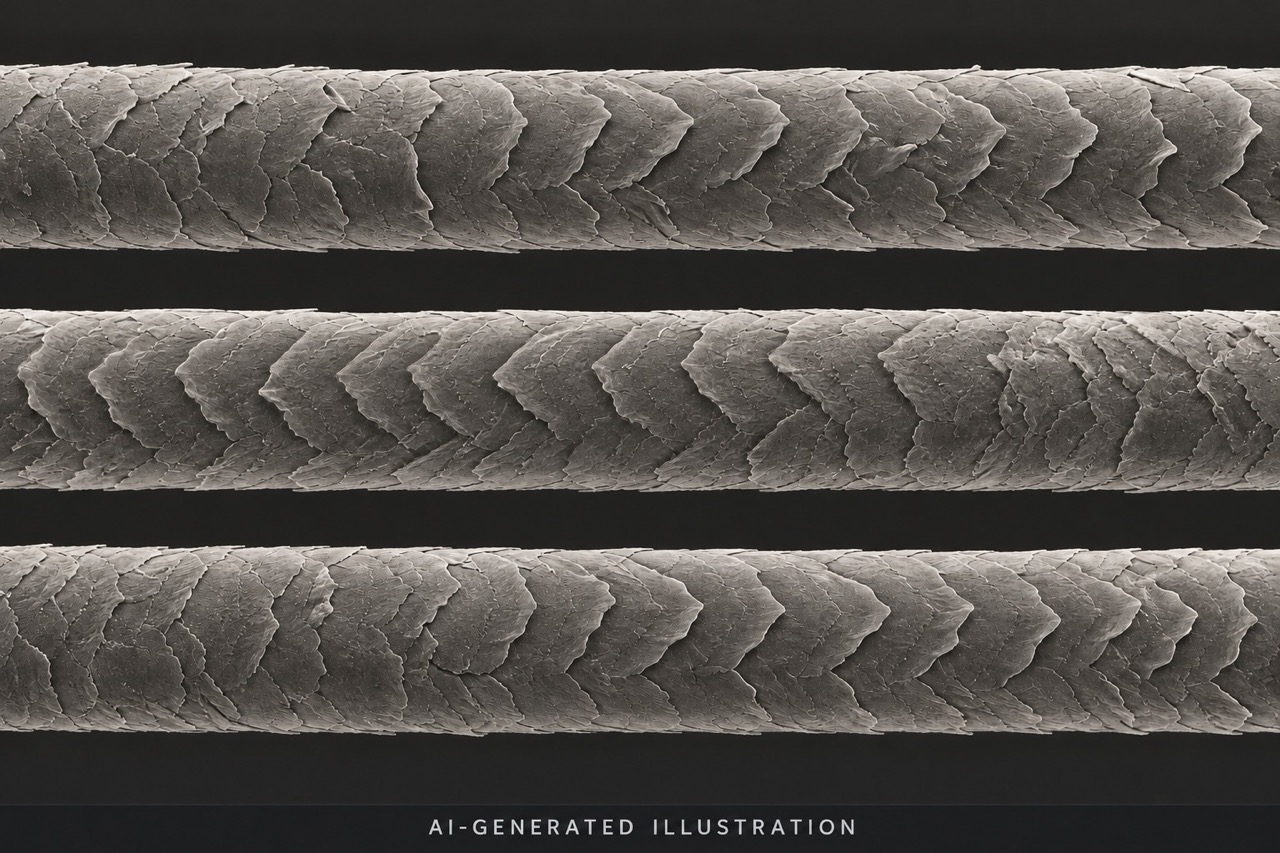
The middle strand points in the opposite direction, illustrating mixed root-to-tip orientation before further sorting or processing.
AI-generated microscopy-style illustrations. These conceptual images explain strand orientation; they are not actual microscope photographs or test results for DK HAIR products.
Suitable untreated hair collected in a mixed arrangement may be carefully sorted into a consistent direction while preserving its cuticles. This is different from chemically removing the cuticles to reduce tangling.
Root-to-tip sorting does not change the hair’s chemical processing history, and it does not turn hair from multiple donors into single-donor hair.
COMPARE AT A GLANCE
Understanding the Labels at a Glance
| Term | What it primarily describes | What to confirm |
|---|---|---|
| Raw Hair | A supplier’s standard for selected hair and limited processing | Donor count, cuticle condition, chemical history, and whether texture is natural or steam-created |
| Virgin Hair | Chemical processing history | Collection method, strand condition, and whether the term describes the source hair or finished product |
| 100% Human Hair | The material of the hair fibers | Sourcing, processing, cuticle condition, and suitability for your intended use |
| Remy Hair | Retained cuticles aligned from root to tip | How alignment was preserved or achieved, and what other processing occurred |
BEFORE YOU CHOOSE
What to Ask Before You Buy
A useful product description should explain more than the category name. Ask:
- How was the hair collected and selected?
- Is each bundle or lace piece single donor?
- Are the cuticles retained and aligned?
- Is the texture natural or steam-created?
- What treatments has the finished product undergone?
- Is further coloring or bleaching suitable?
- What lifespan is realistic for this product and your care routine?
FIND YOUR HAIR WITH DK HAIR
Let’s Discuss Your Hair Options
At DK HAIR, we encourage customers to discuss these details when choosing between Raw Hair and Virgin Hair. Share your preferred texture, product type, and styling plans so we can help you understand the options available.


